
Back in September, I had the opportunity to travel to Southern Poland to visit my relatives. While the trip was focused on much needed family time, I was still able to fit in some sightseeing, which is summarized for you below ツ!
Sandomierz
The first city I was able to see during my travels was Sandomierz, a historic town located near the Vistula River (Wisła, in Polish), which is the largest river that flows through Poland. Sandomierz is very important to Poland’s history, as it was home to Polish royalty, was heavily involved in trading with other major Polish cities along the River, and was also forced to rebuild after being involved in many wars.
We started our visit in Sandomierz by entering through the main entrance at the Opatów Gate (Brama Opatowska). Back in the 14th century, Sandomierz was enclosed by brick walls (part of its defence system), and you could only access the town through one of its four gates, only one of which remains today – the Opatów Gate. I learned after-the-fact (once I was back in Canada) that you can actually go to the top of the Gate and enjoy panoramic views of Sandomierz and the Vistula River!
After walking through the Opatów Gate, you will pass several shops before arriving in the Market Square. The Market Square, or Rynek in Polish, was bustling with tourists and buskers, my favourite being the gentleman playing the accordion. The rynek is surrounded by souvenir stores, restaurants and tour vehicles, and at the centre you will find the historic City Hall and clock tower. While taking in my surroundings, I noticed several people sketching the building, which was not surprising as the Structure is supposedly one of the nicest city halls in Poland.
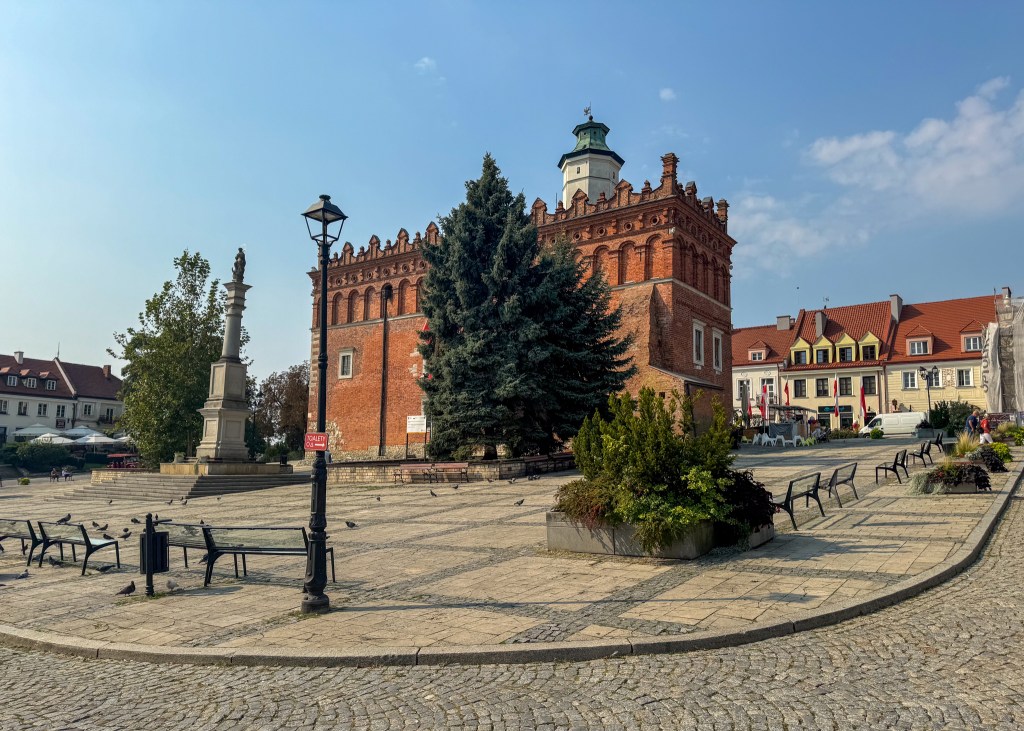
There are many other stunning architectural structures to see in Sandomierz. We went inside the Sandomierz Cathedral, the Sandomierz Castle (which is now a museum filled with archeological exhibits, art, history and more) and walked through the Needle’s Eye (Ucho Igielne), which is a very narrow passage into the town. One of the tour guides we met informed us about an old myth related to the Needle’s Eye: apparently, if you have been a “bad” person, or have a guilty conscience, the passage will close on you when you try to pass through – scary!
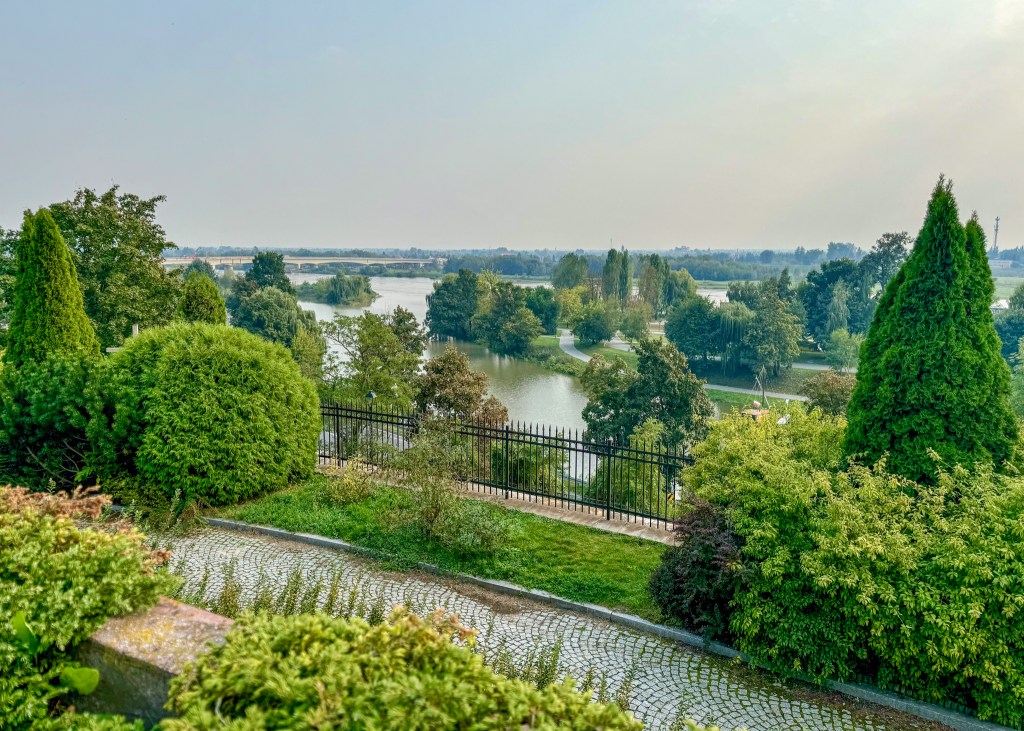
Other than these structures, I would definitely recommend taking a walk by the Vistula River, and having a meal in Sandomierz. I enjoyed a plant-based gnocchi meal at Widnokrąg, which is located right by the Opatów Gate – it was delicious!
Rzeszów
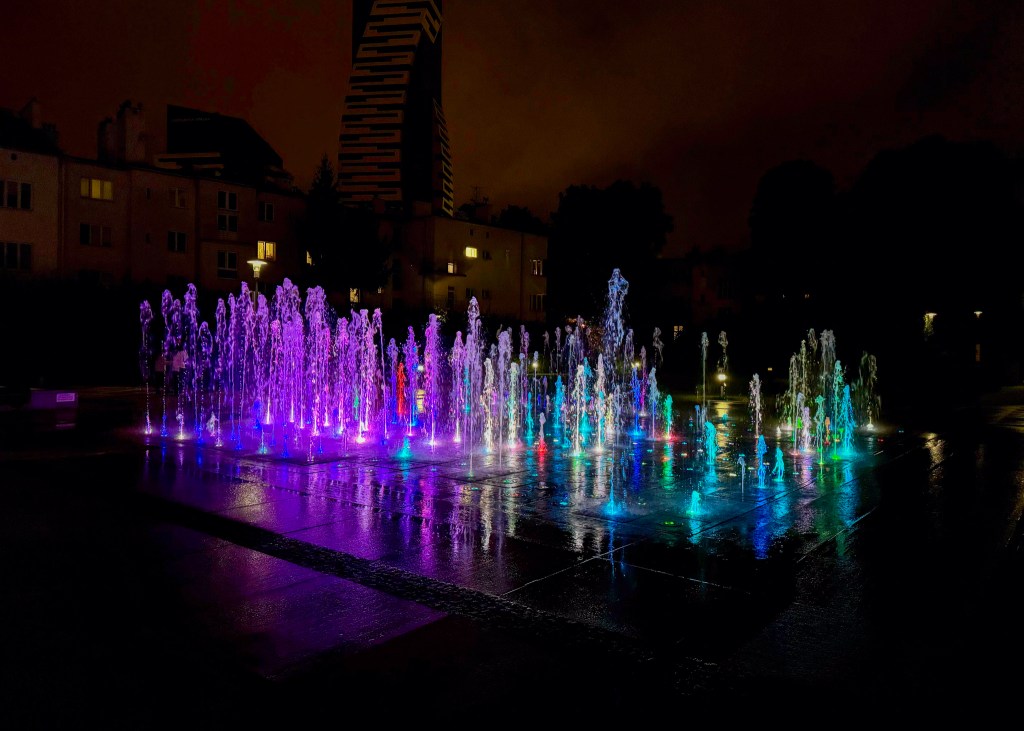
Rzeszów was the next city we were able to visit. While it does not contain the same amount of history as Sandomierz or Kraków (another city I visited – discussed later in this post), Rzeszów is one of the largest and fastest developing cities in Southern Poland. Our main purpose for visiting Rzeszów was for shopping – their rynek is filled with clothing and jewelry shops, as well as various restaurants. We definitely indulged in ice cream, fries (served in a paper cone, which reminded me of my time in Amsterdam), and my favourite was the freshly baked pretzels. The market square also contains a beautiful church (there is definitely no shortage of churches in Poland) and water fountain, both of which were worthy stops during our visit.
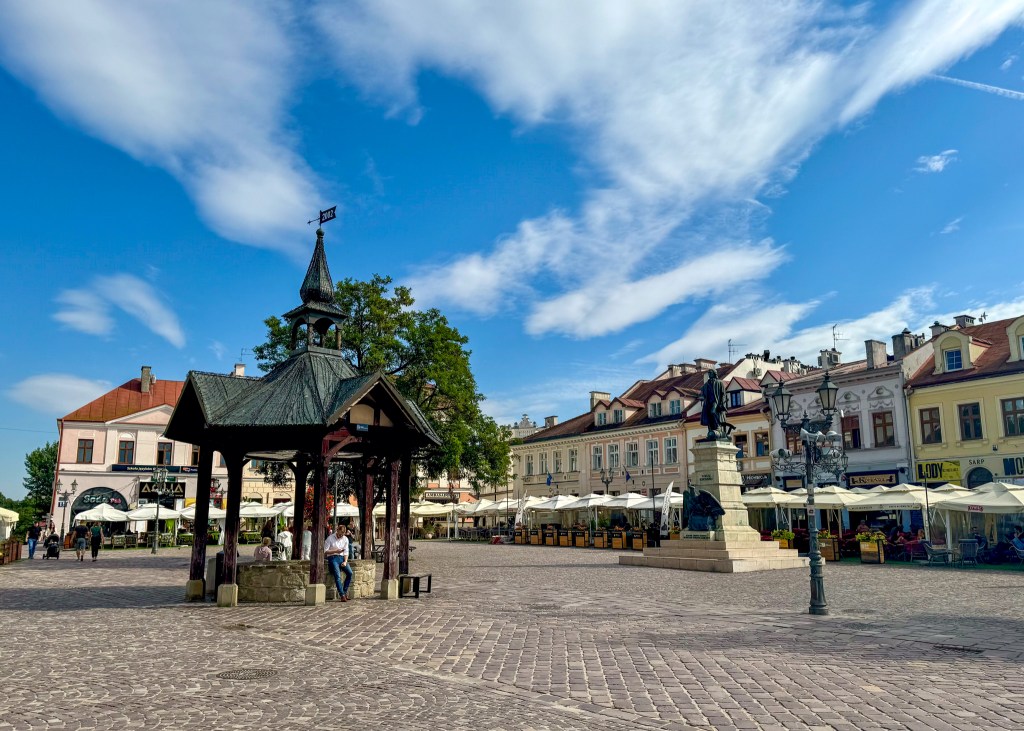
Other than the market square, we also explored the major malls in Rzeszów and stopped for lunch at Zielona Baza, which was a fully plant-based restaurant serving burgers, salads and wraps.
Łańcut
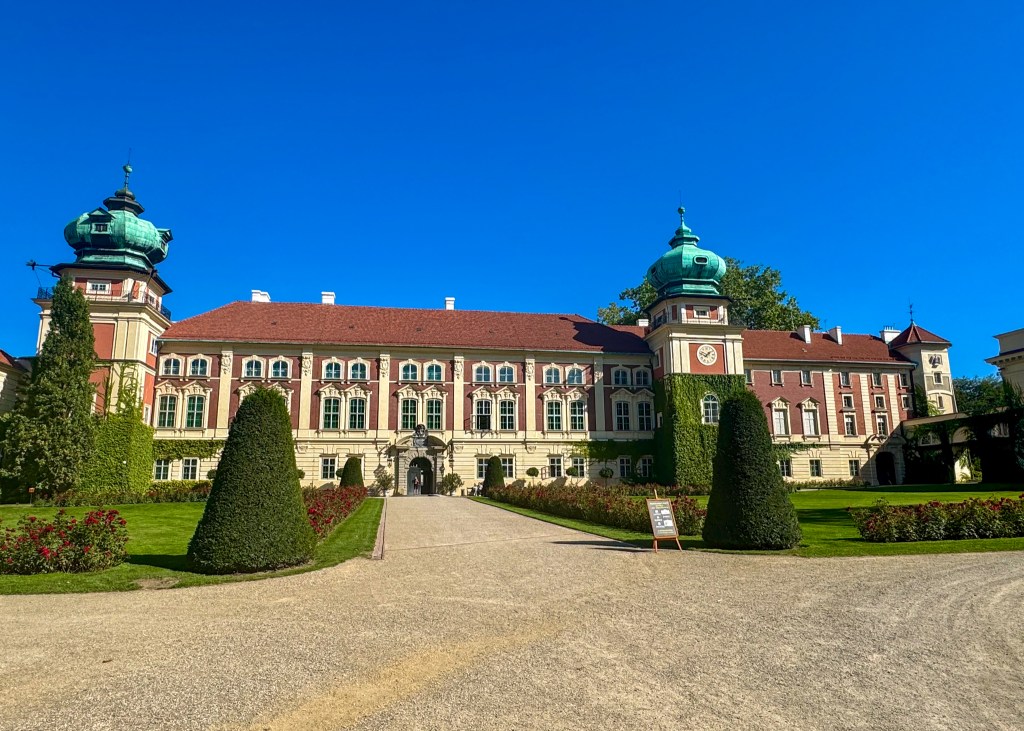
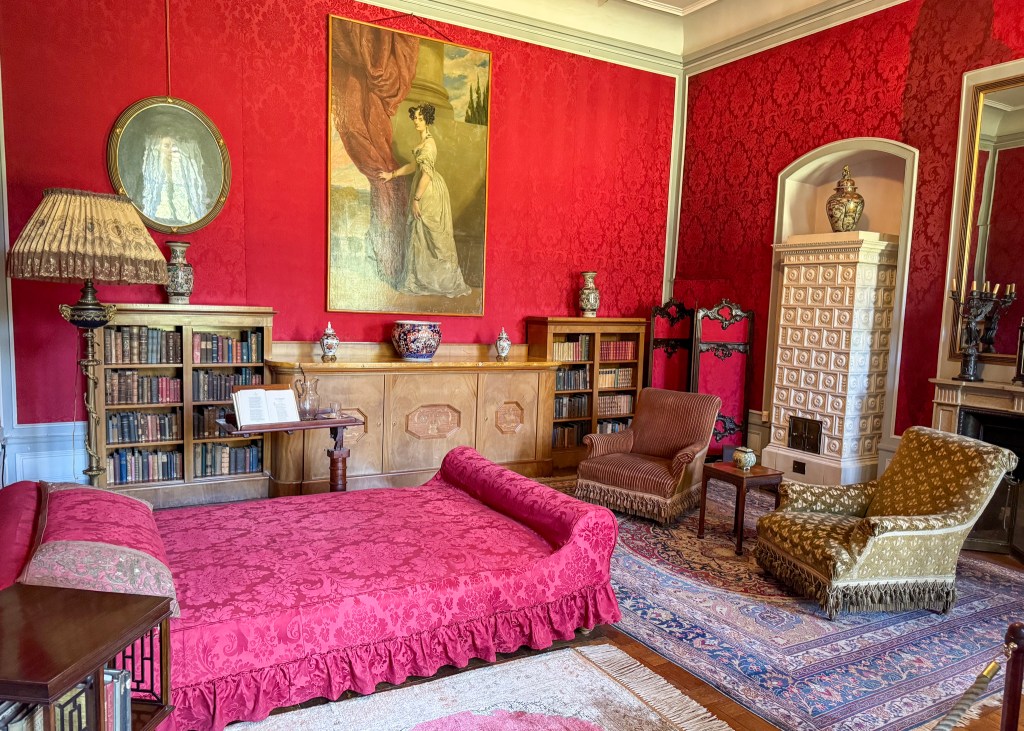
We made a quick visit to Łańcut one afternoon in order to see the Łańcut Castle. We completed a tour of the first floor of the castle, which once upon a time, was home to several royal Polish families. The tour takes you through various living spaces such as the private bedroom chambers, ballroom and dining rooms. Our tickets also included a tour of the Stables and Coach House, where you are able to see a collection of horse carriages that were used during the 18th and 19th centuries. After we were done with the tour, we made sure to walk the Castle grounds to take in the beautiful gardens and landscaping.
Zakopane
Next on the list was a mandatory visit to Zakopane, a small resort town located in the Tatra Mountains (Tatry) near the Slovakia border. I often describe Zakopane as the Whistler of Poland – it is surrounded by beautiful mountain views, and there is no shortage of things to do, regardless of the season. Many visitors enjoy hiking during the summer, skiing during the winter, and you can explore the shops and restaurants along Krupówki Street (the main “strip”) at any time during the year.
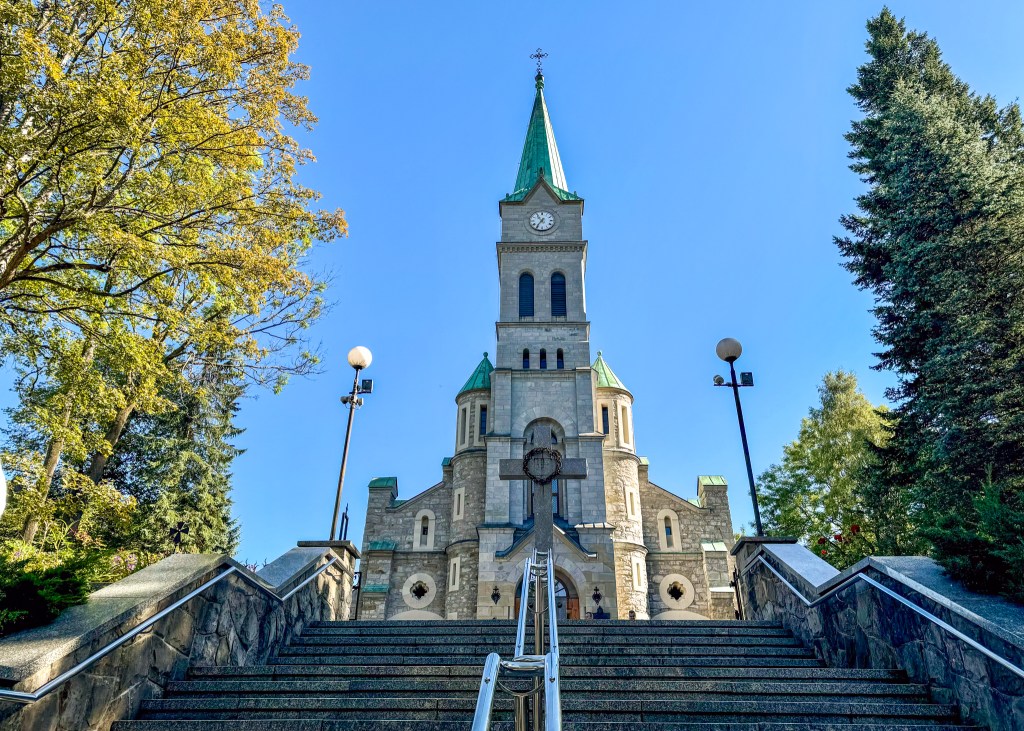
Since we only had half a day to explore Zakopane, we prioritized walking down Krupówki Street, where I purchased several souvenirs and gifts for family and friends, and made a quick visit to the Sanktuarium Najświętszej Rodziny church.
Not too far from Krupówki Street was one of my favourite attractions – the Upside Down House. As the name suggests, the house is literally upside down – you will walk on the “floor,” which is actually the ceiling, and all the furniture and fixtures (e.g., chairs, fireplace) will be on the “ceiling” above you, which is actually the floor. To make things more difficult to navigate, the house is on a slant!

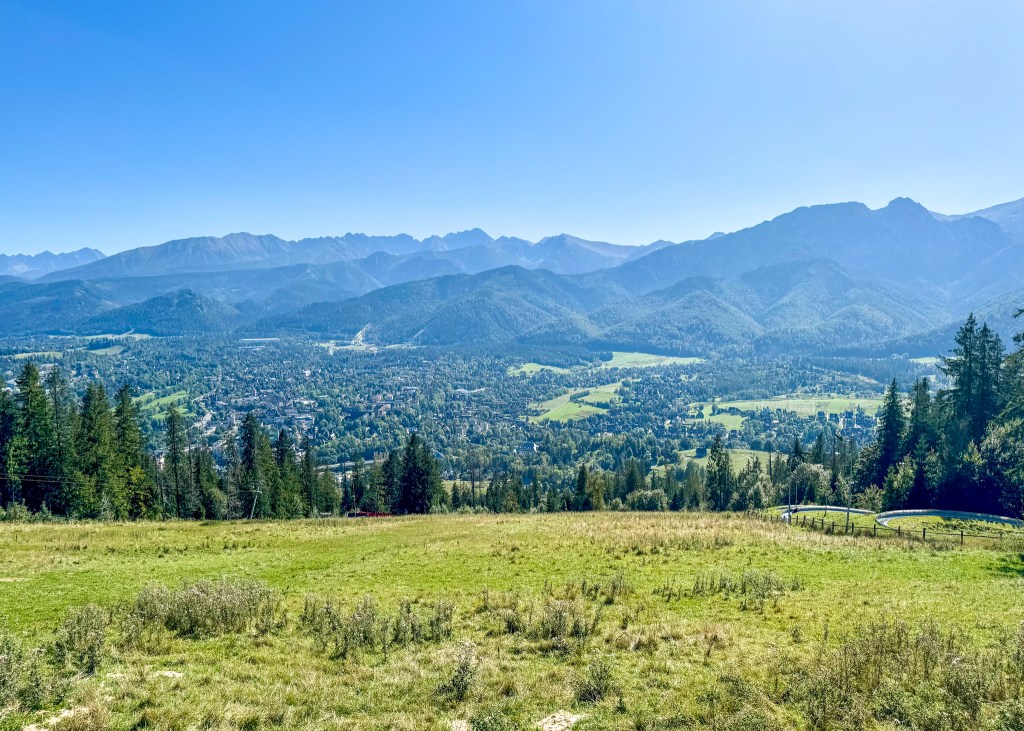
Following our visit to the Upside Down House was a walk along Gubałówka Mountain to take in the views of Zakopane and the Tatra Mountains. Visitors can take the chairlift up to Gubałówka, but we opted to drive and walk. There are several shops and restaurants along Gubałówka (just like Krupówki Street), a chapel, and we were even lucky enough to witness a Góralski Wedding. Górale are the ethnic group that live in the Zakopane region, and their traditional clothing consists of several bright colours and floral patterns, which were evident in their wedding attire!
The final two stops we made in Zakopane were to see the famous ski jumps, as well as the large Zakopane welcome sign. For food, we enjoyed a vegetarian pizza (with plant-based cheese) at Pizzeria Pinokio.
Wadowice
The primary reason we wanted to visit Wadowice was to go to the John Paul II Family Home Museum. The late Pope John Paul II was born in Wadowice, and his family home from when he was younger has been turned into a popular tourist attraction. Visitors can learn about the Pope’s youth, his family, and the years he spent as head of the Catholic Church, as well as observe various displays of his clothing and other possessions. Visitors can also walk through the actual rooms that made up the Pope’s family home – the furniture and design of the space have been recreated to authentically reflect the home’s original state. I will admit that I do not usually enjoy visiting museums (you can ask Justin), but I really appreciated the John Paul II Family Home.
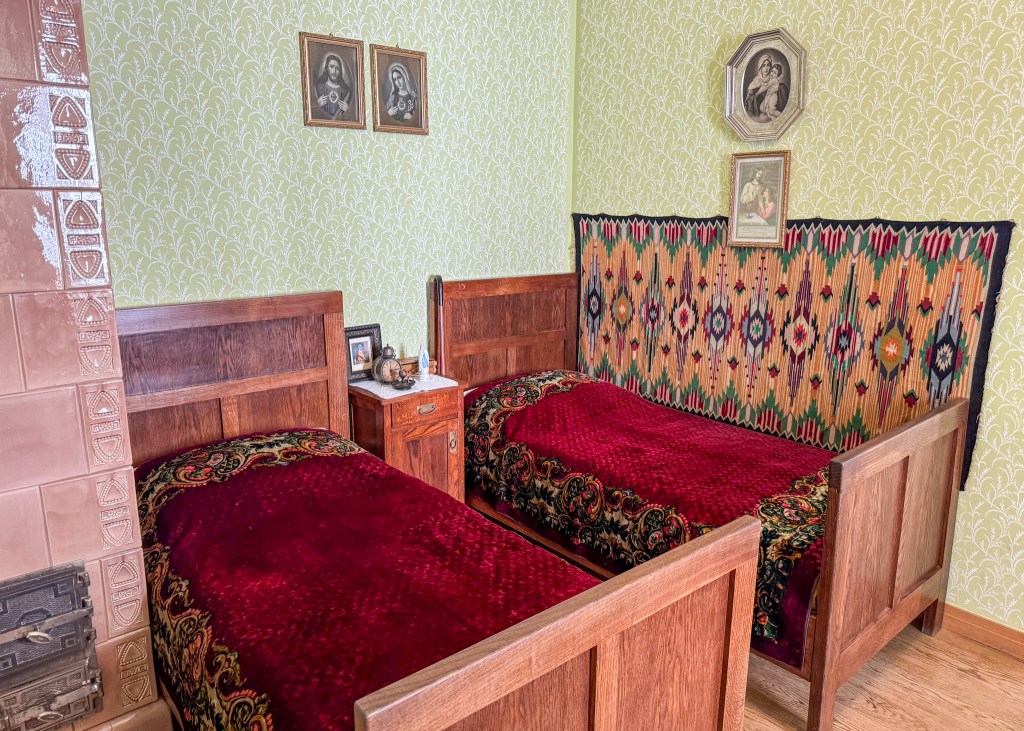
Other than the museum, we also attended a mass in the basilica next door before heading to our next destination – Kraków.
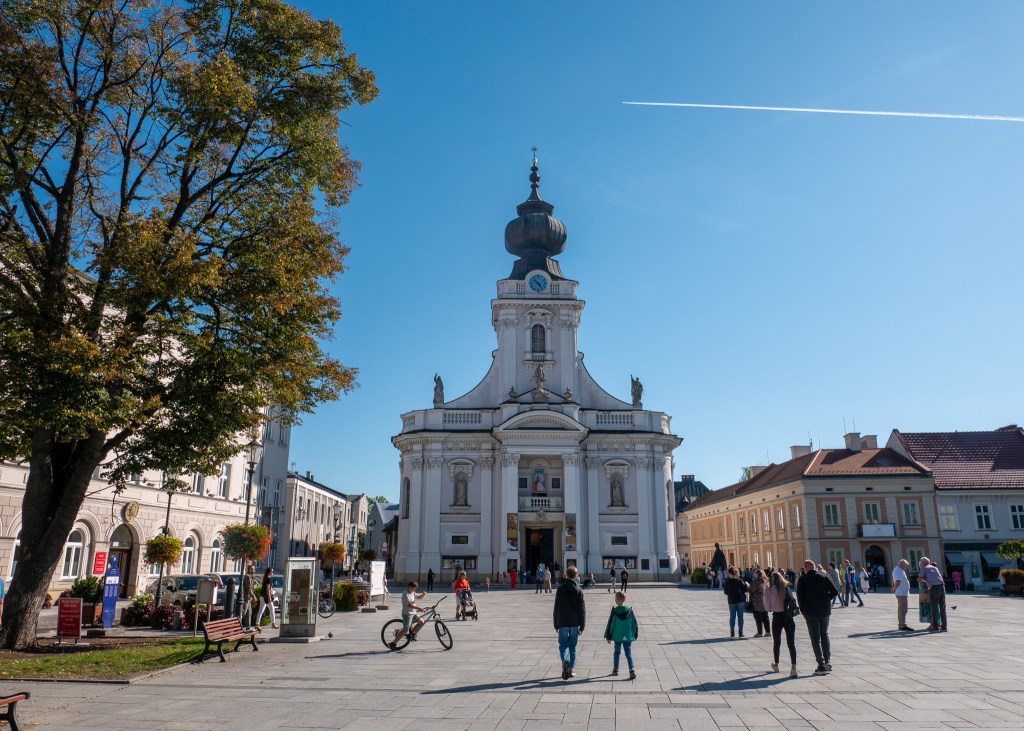
Kraków
Kraków is probably one of the better known cities in Poland, as it used to be the capital of the Country. There is a lot of history in Kraków (including an invasion by Germany in World War II), which means there are many historic buildings, churches and castles to visit. Because we only had a short afternoon to explore the City, we prioritized visiting the Wawel Royal Castle, which was home to many Polish kings and queens for a number of centuries.
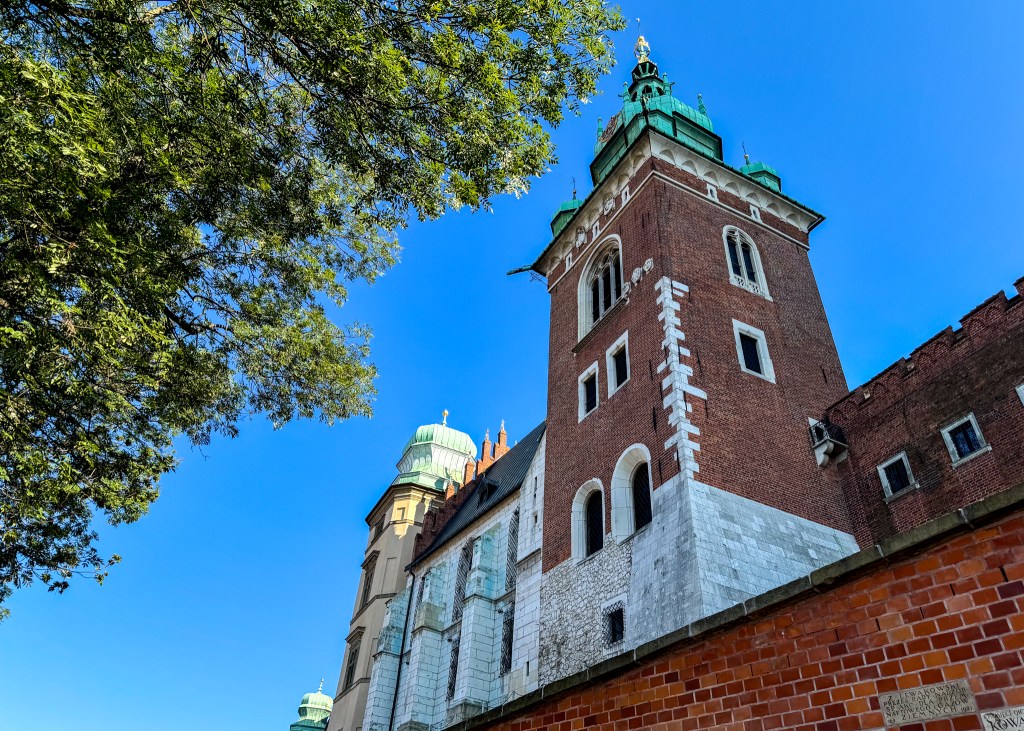
Next, we explored the rynek (you must be very familiar with this word by now), which similar to other Polish cities, was surrounded by souvenir stores and eating establishments. Further, if you have an appreciation for European church architecture, there are multiple churches to see in Krakow (the cover photo for this blog was from the inside of a Polish church). One activity I wish we had time for was to do a boat cruise down the Vistula River, which also passes through Kraków. At least we were able to find a spot by the river to watch the sunset ツ.

Further, I was excited to see that Kraków has many plant-based options and restaurants, but given our limited time, we could only pick one to try – we opted for No Bones Vegan Food. I very much enjoyed my salad with “chick’n” (it appears to have been a seasonal option that is no longer on the menu), and later indulged in a slice of their delicious sponge cake. I will note that the entrance to the restaurant is a bit unexpected – somewhat of a dark tunnel – but keep going, the food was worth it!
Wieliczka
Our last stop in Southern Poland was the small town of Wieliczka, as we were very interested in visiting the Wieliczka Salt Mine. Our visit to the salt mine was probably my favourite part of the trip – I would strongly recommend booking a tour and heading 130 metres underground to experience the tunnels and sculptures that are made of salt!
In terms of preparing for a visit to the salt mine, you should be aware that you will begin your descent underground by going down an 800-step winding stair case – make sure to bring your walking shoes! You might also be thinking about whether you need to take the stairs back up, but I am happy to report there are elevator lifts to assist with your exit ツ. I also found that there was a bit of a draft in the underground tunnels – I would recommend bringing a sweater or light jacket, just in case!
Your tour guide will take you through a series of tunnels, educating visitors on how to mine for salt, as well as providing some Polish history. Not only will you encounter several salt sculptures during the tour, you will actually get to experience an entire underground chapel that is constructed from salt – apparently, it is a popular venue for events such as weddings!
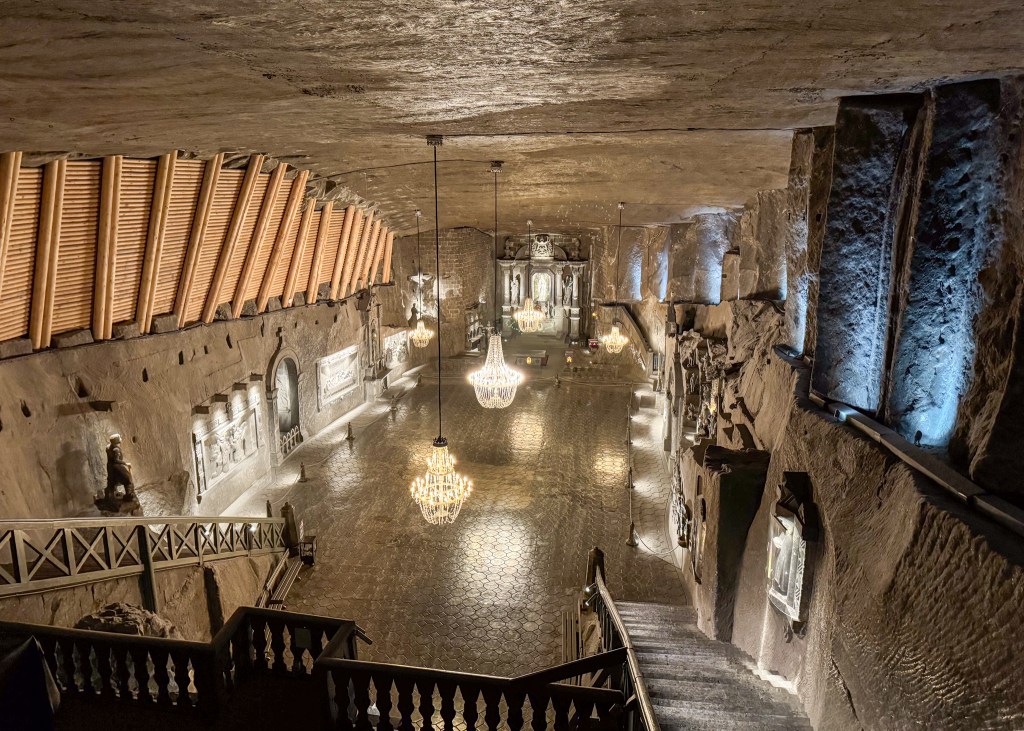
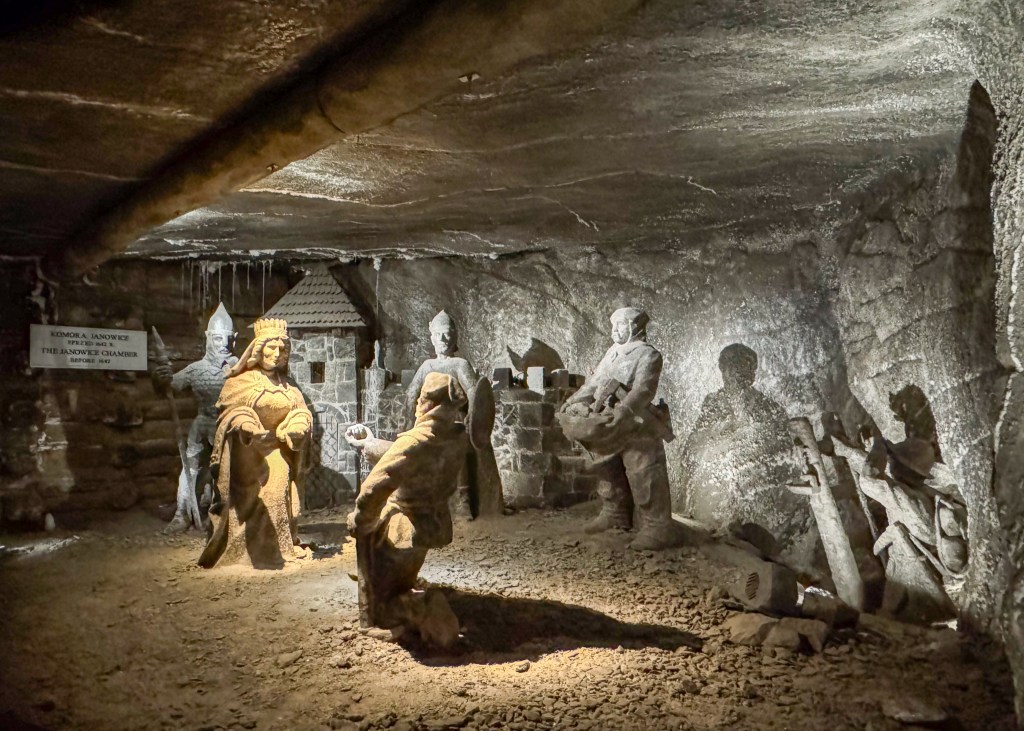
You could likely spend all day underground, as there is also a museum you can visit following the tour, but since you already know my stance on museums, I do not think you will be shocked to hear that I opted to head to the gift shop, instead ツ. The Wieliczka gift shop is probably one of the best I encountered in Poland – there are several very practical purchases you can make here, all of which include salt from the mine – salt (shocking, I know), seasoning for cooking, chocolate, body lotions that include brine, etc.
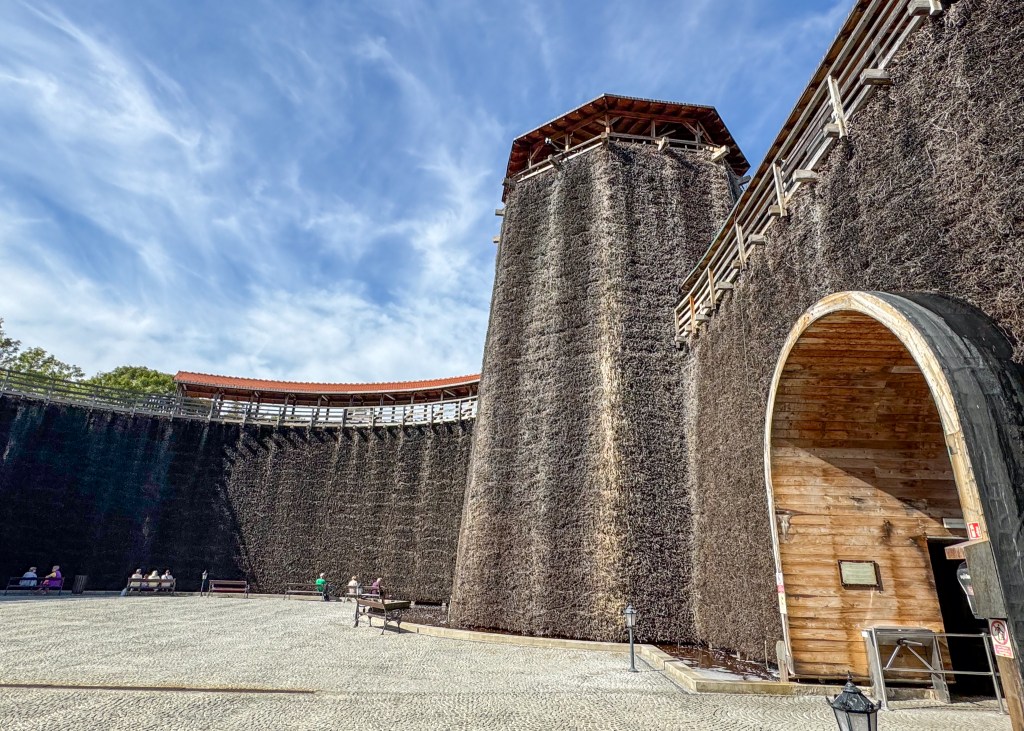
Once you are back above ground, I would recommend making a quick stop at the Graduation Tower (Tężnia Solankowa) – make sure to include this option when purchasing your tickets. Graduation Towers are used to separate water from saline solutions, enhancing mineral content. Apparently, there are health benefits to being in the presence of the Graduation Tower – the mineral content in the air can help with clearing respiratory issues, and further contribute to a relaxing environment.
Well, I think that concludes my time in Southern Poland this past fall! During my layover in Frankfurt, I had a brief conversation with another travel, and I said to him that I feel Poland is a very underrated tourist destination. Therefore, the next time you are planning a trip to Europe, I would definitely encourage you to spend some time in Poland. There is no shortage of history, beautiful architecture and different landscapes to see, which I hope I have convinced you of through this blog post ツ.
Always grateful,
Michelle
 Exploring With Gratitude